Free UK mainland delivery over £500 ex VAT

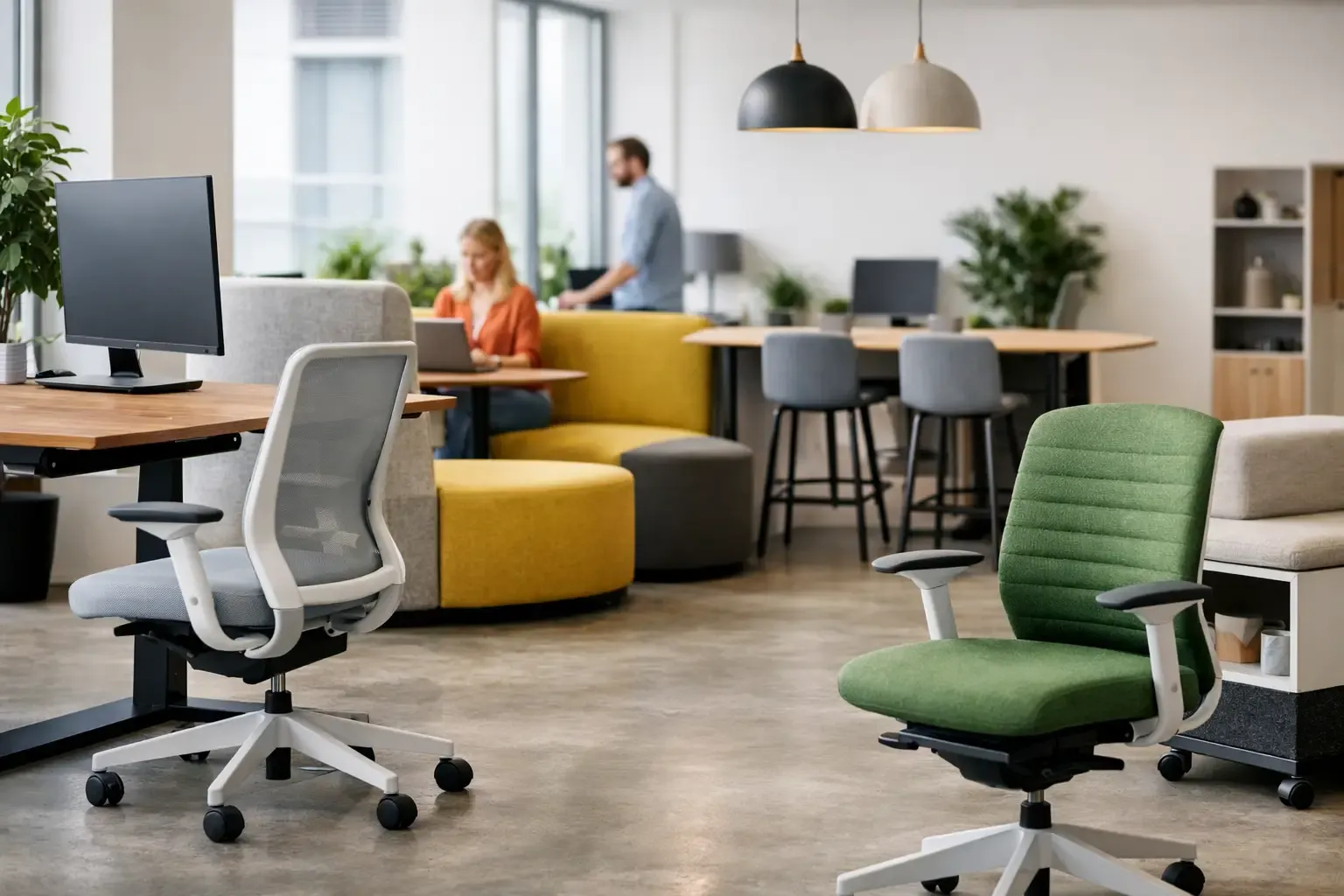
A row of identical desks is no longer the automatic answer to an office move or refurbishment. Across the UK, organisations are reassessing what people need from the workplace: somewhere to focus, meet, learn, welcome visitors and spend time with colleagues. The most useful workplace furniture trends UK buyers are responding to are therefore practical rather than decorative. They are about making every square metre work harder, while giving staff a comfortable reason to come in.
For office managers, facilities teams and procurement buyers, the question is not whether a trend looks good in a brochure. It is whether it suits the building, the people using it, the working pattern and the available budget. A well-planned scheme can improve circulation, reduce noise and support a more flexible working day. A poorly chosen one can leave expensive furniture underused.
The biggest shift is towards adaptable furniture and layouts. A meeting room used twice a week may need to become a project area, training room or quiet space at short notice. Lightweight meeting tables, folding tables, mobile pedestals and easily repositioned seating make this possible without a major reconfiguration.
This does not mean every item needs castors. Furniture that moves too freely can make a space feel temporary and may not be suitable for areas used by visitors or for formal meetings. The sensible approach is to keep core workstations and key storage stable, then build flexibility around them with mobile tables, stackable visitor chairs and breakout seating.
Schools and public sector settings often benefit from the same thinking. Rooms are frequently shared by different groups, so durable tables and chairs that can be stored or rearranged efficiently can create more value from limited space.
Hybrid working has changed the role of the desk. Some organisations need fewer individual desks, while others still require a workstation for every employee due to operational needs, security or personal equipment. There is no universal desk-to-person ratio, and guessing can be costly.
Bench desks remain a strong choice where teams work alongside one another and floor space is at a premium. They create a tidy, consistent footprint and can accommodate shared power and data access. Individual desks and corner desks can be the better option for roles needing more surface area, dual screens or a greater degree of privacy.
Sit-stand desks are also becoming a more considered part of the mix. They can support employee choice and suit users who spend long periods at a screen. However, fitting every desk with height adjustment is not always the best use of budget. Many workplaces achieve a balanced result with a combination of standard desks, a number of sit-stand positions and suitable ergonomic seating for all staff.
The detail matters here. Desk depth, cable management, monitor arms and access to power can make the difference between a workstation that looks neat on installation day and one that remains easy to use six months later.
Open-plan offices encourage interaction, but they can also make concentration difficult. This is why acoustic products are moving from a specialist addition to a standard part of many workplace projects. Desk screens, acoustic wall panels, freestanding screens and high-back seating can all help soften sound and create visual separation.
Acoustic furniture should be selected to solve a known issue, not simply added because it is fashionable. A busy customer service team may need sound absorption around banks of desks. A small office might get greater benefit from one enclosed meeting or focus area. In reception spaces, upholstered seating and acoustic panels can improve the experience without making the area feel closed off.
It is also worth remembering that acoustics are affected by the whole room. Hard floors, glazed partitions and bare walls reflect sound. Furniture can help, but the best result normally comes from considering layout, finishes and behaviour together.
Breakout furniture has developed beyond the traditional sofa and coffee table in the corner. Organisations are creating informal settings for quick catch-ups, laptop work, lunch breaks and private calls. The aim is to offer a choice of settings without turning the office into a café that no one can work in.
High tables with stools can work well for short, informal conversations. Soft seating suits relaxed collaboration and waiting areas, while booth-style seating can give small groups a more enclosed place to talk. Adding integrated power and USB charging is particularly useful where staff are expected to work away from their main desk.
The trade-off is space. Generous lounge furniture can consume a surprising amount of floor area, so it needs to earn its place. Before buying, consider how many people will use the area, whether laptops will be used, how often confidential conversations take place nearby and how the furniture will be cleaned and maintained.
Reception furniture is increasingly expected to do more than hold a sign-in book. It sets the tone for clients, candidates, parents and suppliers, while giving reception staff a secure, functional workspace. Modular reception desks are useful because they can be configured around the shape of the entrance and the level of privacy required.
A good reception scheme should account for accessible counter heights, secure storage, cable routes and a clear route from the entrance to seating or meeting rooms. Visitor chairs need to be comfortable enough for a short wait and hard-wearing enough for regular use. In public-facing environments, easy-clean finishes and dependable construction should take priority over delicate materials.
The push towards paper-light working has led some organisations to underestimate storage needs. Even highly digital teams still need places for personal belongings, stationery, confidential files, samples, cleaning equipment and shared technology. When storage is forgotten, desks and meeting rooms quickly become the overflow area.
Current schemes tend to use storage more deliberately. Personal lockers can support hot-desking. Credenzas can divide a room while providing practical capacity. Mobile pedestals give individual users somewhere to keep essential items, and tall cupboards can make effective use of wall space where floor area is tight.
The right choice depends on what needs storing and who needs access. A compact office may favour lockers and shared cupboards, while a design or operations team may need deeper storage for equipment and materials. Plan the contents before choosing the cabinet, rather than trying to fit everything in afterwards.
Trends are useful prompts, but a furniture project should start with a clear brief. Count the users, identify the work they do, note the technology they rely on and look at how people move through the space. This helps avoid buying a collection of attractive products that do not work together.
Before finalising a layout, ask four straightforward questions:
Which activities must happen in the office, rather than at home or elsewhere?
Where do people struggle now: noise, lack of meeting space, poor storage or uncomfortable seating?
What needs to stay flexible as the organisation grows or changes?
Which items need to withstand the heaviest daily use?
A site survey is valuable because plans do not always show obstructions, uneven walls, access restrictions, radiator positions or existing power points. It also allows desk runs, storage and circulation routes to be checked before an order is placed. For organisations in East Anglia, Orbis Furniture can provide a free site survey, alongside space-planning advice and installation support.
Budget should be considered across the life of the furniture, not only at the point of purchase. The lowest-cost chair may be false economy in a role where it is used all day. Equally, a premium specification is not necessary for every occasional-use meeting chair. Matching the product to the setting is how buyers protect both staff comfort and value.
The strongest workplace schemes are not built around a single trend. They combine dependable desks and seating with flexible meeting, breakout, storage and acoustic elements where these solve a real problem. Colour and finishes can bring the scheme together, but functionality should lead the decision.
If you are planning a new office, refresh or multi-room fit-out, start with the way your people actually use the space. A practical conversation about layout, budget, delivery and installation can save a great deal of time later, and help you choose furniture that supports the working day rather than getting in its way.
Projects and fit-outs
Chairs, desks, tables, storage and soft seating, with free standard delivery to UK mainland addresses on orders over £500 excluding VAT.
Office and educational furniture specialists based in Lowestoft, supplying Suffolk, Norfolk and the whole of the UK. Chairs, desks, tables, storage and soft seating from one supplier, at low prices.
Get in touch
Riverside Business Centre, Riverside Road, Lowestoft, Suffolk, NR33 0TQ
Delivery
Free standard delivery to UK mainland addresses on select orders or orders over £500 excluding VAT. Next working day, pre-build and installation options available on most ranges at checkout.
© 2026 Orbis Furniture Ltd. Registered in England and Wales, company number 12397240. VAT number GB 362 8523 86.