Free UK mainland delivery over £500 ex VAT

A desk layout that was right three years ago can now be a daily frustration. Teams may be smaller on some days, together for project work on others, and split between focused tasks, video calls and informal catch-ups. The future of workplace furniture is not about filling an office with gadgets. It is about choosing practical, adaptable furniture that helps every square metre work harder.
For business owners, facilities teams, schools and public sector buyers, the question is not simply which desks look best. It is how a space can support people, accommodate change and remain good value over its working life. That calls for furniture that is comfortable, durable and straightforward to reconfigure when requirements move on.
The traditional office was often planned around fixed departments: a bank of desks for one team, a meeting room for another and a reception area that changed very little. Many organisations now need more choice within the same footprint. A space may need to host concentrated individual work in the morning and a team session in the afternoon.
Bench desks with shared frames can be a sensible starting point where teams need density without a cramped feel. They create clear workstations while allowing cable management, screens and power to be organised properly. Where headcount or team structures are likely to change, modular desk systems make it easier to add, remove or rearrange positions without replacing an entire office.
Flexibility does not mean every item needs to be on castors. Too much mobile furniture can make a space feel temporary and can create problems with stability, storage and cable routes. A better approach is to keep core workstations dependable, then introduce movable tables, lightweight seating and adaptable breakout pieces where they bring a genuine benefit.
For schools and training environments, the same principle applies. Tables that can be grouped for collaborative work or separated for individual learning give staff more control over the room. The right choice depends on how often layouts change, the age of users and whether furniture needs to be stored between sessions.
Good seating and sensible desk set-up are not optional extras when people spend long periods at a workstation. As employers focus on attendance, wellbeing and retention, the physical experience of being at work matters more. A chair that adjusts properly, a desk at the right height and space to change posture can make a noticeable difference to day-to-day comfort.
Task chairs should be selected for the people and hours of use they are expected to support, not just their purchase price. For a lightly used touchdown desk, a simple adjustable chair may be entirely suitable. For full-time workstations, it is worth considering adjustable lumbar support, seat depth, armrests and mechanisms that encourage movement.
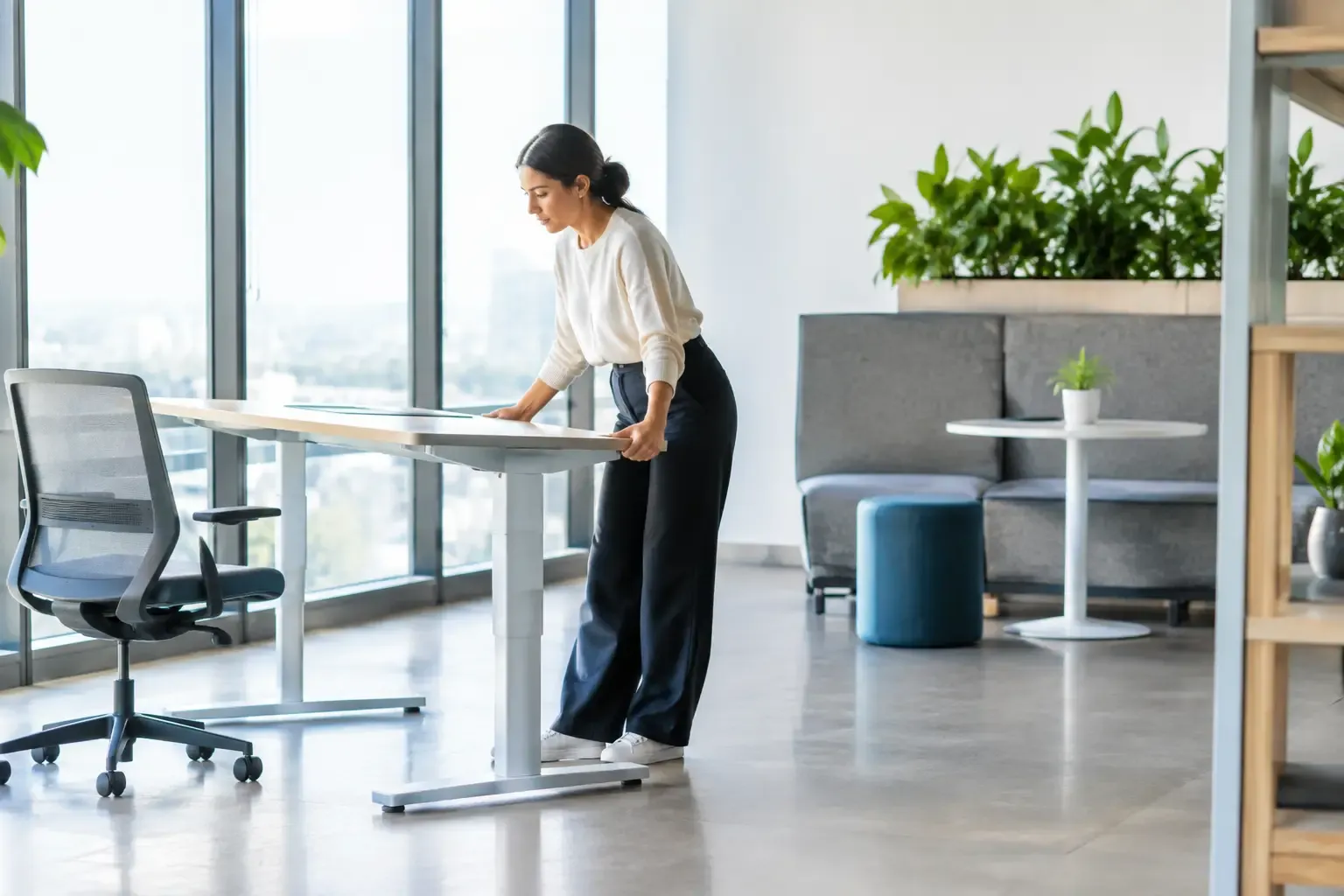
Sit-stand desks will continue to have a place in the future workplace, particularly for users who value the option to vary their position during the day. They are not automatically the right answer for every desk. Budget, power access, user needs and the nature of the work all matter. In many offices, a mix of fixed-height and height-adjustable desks offers a more proportionate solution than converting every position.
There is also a practical point that is sometimes overlooked: furniture must be easy to use. If adjustments are awkward or staff do not understand how to set up their chair, the benefit is lost. Clear guidance during installation and a layout that allows proper access to desks and storage are part of getting ergonomics right.
The office is increasingly valued for the activities that are harder to reproduce at home: meeting colleagues, sharing ideas, welcoming visitors and building relationships. This does not make individual desk space less important, but it does mean organisations are paying closer attention to meeting, breakout and informal areas.
A well-planned breakout space can give staff somewhere to take a short break, have an informal conversation or work away from their usual desk. Soft seating, café-height tables and compact meeting tables can make these areas useful without turning them into unused showpieces. The key is to match the furniture to the behaviour you want to support.
Meeting rooms also need a more considered approach. A large boardroom table may still suit senior meetings or client presentations, but smaller rooms often benefit from tables that support hybrid calls, laptop use and quick project discussions. Integrated power and data access helps keep surfaces clear and reduces the familiar scramble for extension leads before a meeting starts.
Reception furniture will remain important too. It creates a first impression, but it also needs to work for reception staff, visitor sign-in and deliveries. A practical reception desk should provide the right working height, suitable storage and a layout that feels welcoming without compromising privacy.
Open-plan offices can make collaboration easier, but they can also bring noise, distractions and a lack of privacy. This is particularly evident when video calls, focused tasks and conversations happen side by side. Furniture is not a substitute for a full acoustic assessment where one is needed, but it can make a meaningful difference.
Desk screens, acoustic panels, high-backed booths and soft seating help absorb sound and create visual separation. They can be especially useful in open offices, libraries, learning spaces and multi-use areas where building works are not practical. Acoustic products also give organisations a way to improve a space in stages rather than committing to major alteration work at once.
The right level of acoustic treatment depends on the room. A busy customer service team will have different needs from a small design studio or a sixth-form study area. Before buying, consider where noise originates, which tasks require concentration and whether staff have somewhere quiet to make private calls.
Sustainability is becoming a more regular part of procurement decisions, but it should not be reduced to a material claim on a specification sheet. Furniture that lasts, can be repaired, can be reconfigured and continues to suit the organisation is usually a better long-term choice than a cheaper item that needs replacing quickly.
This is one reason adaptable systems are attractive. Reusing existing desk frames, adding screens or storage, and changing the arrangement of a space can reduce waste and help protect a budget. Durable finishes are equally valuable in schools, public areas and high-use offices, where furniture has to cope with everyday knocks and cleaning.
It is worth balancing environmental aims with operational reality. A product may be made from recycled content, for example, but it still has to meet the required standard for strength, safety, cleaning and expected lifespan. The most responsible choice is often the one that remains useful for years, rather than the one with the most ambitious label.
The biggest change in workplace furnishing is not a particular chair or table. It is the move towards planning furniture around how people actually use a building. Start with the number of regular users, the tasks they carry out, storage needs, visitor flow, technology requirements and likely changes over the next few years.
Measurements matter, but so do circulation routes, natural light, door swings, fire exits and access to power. A desk may fit on a floor plan yet still leave too little room for a chair to be used comfortably. Likewise, a meeting table may look modest in a brochure but dominate a smaller room once seating and screens are included.
A site survey and space plan can identify these issues before an order is placed. For organisations outside the local area, accurate plans, photographs and a discussion of the working pattern can still provide a strong basis for recommendations. Orbis Furniture can help buyers compare desk, seating, storage, breakout and acoustic options as part of one practical fit-out conversation.
The workplaces that cope best with change will not necessarily be the most expensive or the most heavily designed. They will be the ones with furniture chosen for real people, real tasks and a realistic budget. If you are reviewing an office, school or public sector space, get in touch to discuss what needs to work better now and what may need to change next.
Projects and fit-outs
Chairs, desks, tables, storage and soft seating, with free standard delivery to UK mainland addresses on orders over £500 excluding VAT.
Office and educational furniture specialists based in Lowestoft, supplying Suffolk, Norfolk and the whole of the UK. Chairs, desks, tables, storage and soft seating from one supplier, at low prices.
Get in touch
Riverside Business Centre, Riverside Road, Lowestoft, Suffolk, NR33 0TQ
Delivery
Free standard delivery to UK mainland addresses on select orders or orders over £500 excluding VAT. Next working day, pre-build and installation options available on most ranges at checkout.
© 2026 Orbis Furniture Ltd. Registered in England and Wales, company number 12397240. VAT number GB 362 8523 86.