Free UK mainland delivery over £500 ex VAT

Sustainable Office Furnishing Trends for 2026
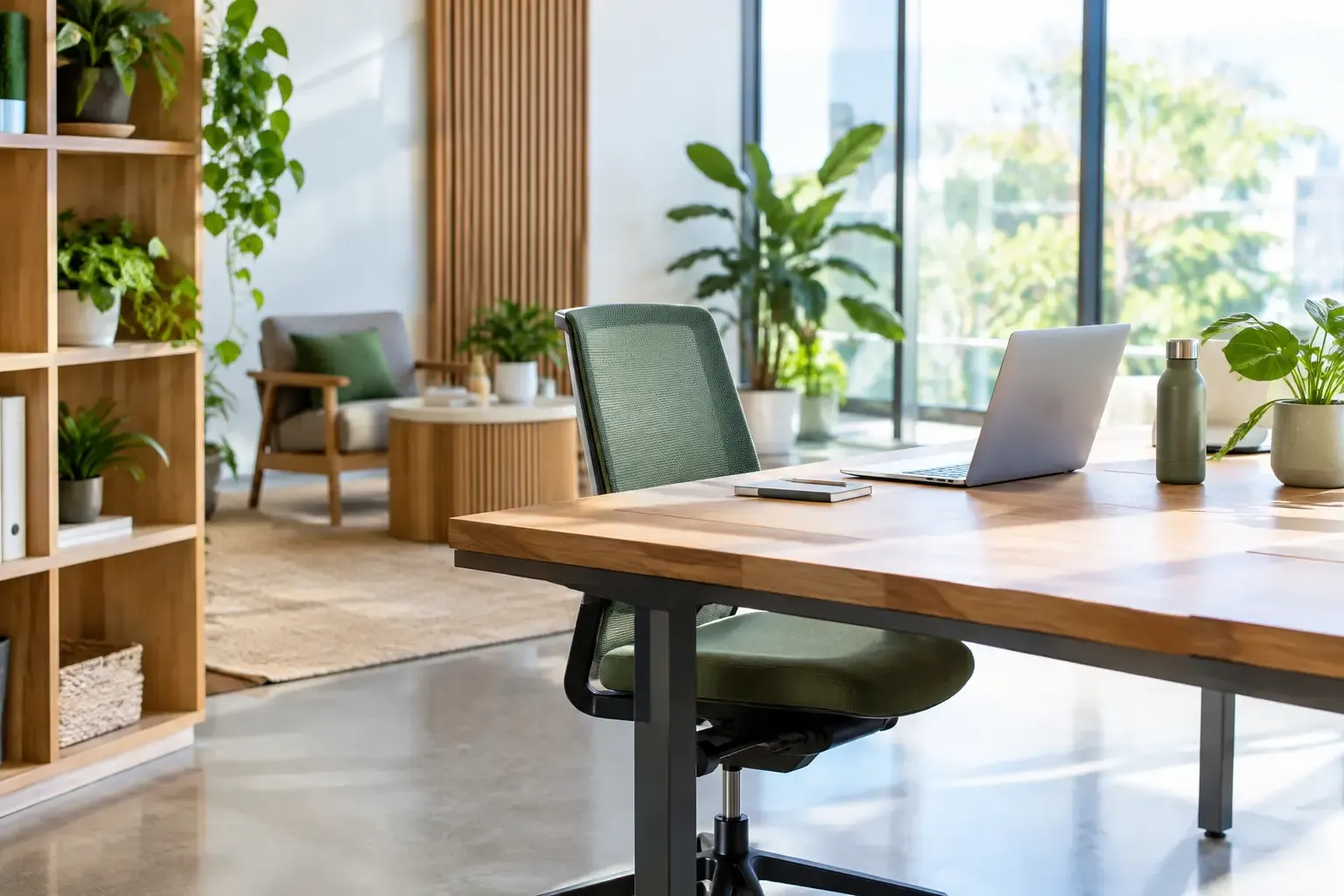
A workplace refurbishment can create more waste than many organisations expect. Desks, chairs, screens and storage may be removed long before they have reached the end of their working life, while new products are sometimes selected on appearance alone. The most useful sustainable office furnishing trends are changing that approach. They focus on making considered choices that work for people, budgets and the long term - rather than simply replacing everything with something labelled green.
For office managers, facilities teams and procurement buyers, sustainability has become part of the practical brief. It sits alongside comfort, durability, lead times, space constraints and cost. The best result is rarely the most expensive option or the most heavily marketed one. It is furniture that suits the job, lasts well, can be maintained and can adapt when the organisation changes.
Sustainable office furnishing trends shaping buying decisions
The shift is away from short-lived fit-outs and towards furniture that provides value over years of use. That means asking better questions before an order is placed: can existing items be retained, does the specification allow for repair, and will the layout still work if headcount or working patterns change?
Reuse before replacement
The most sustainable desk or chair is often one already in the building. Reuse is becoming a more established part of workplace planning, particularly where a business is moving office, reconfiguring departments or introducing hybrid working.
This does not mean keeping unsuitable furniture at all costs. Worn-out seating, damaged tops and poorly sized workstations can affect staff comfort and the professional feel of a space. But many products can be cleaned, repaired, re-upholstered or redeployed into lower-use areas such as stores, touchdown zones and back-office rooms. A site survey can help identify what is worth retaining and where a smaller quantity of new furniture will make the greatest difference.
For organisations with a mixed estate, standardising finishes and dimensions can make reused and new pieces look intentional rather than pieced together. Matching desk ranges, storage heights and screen colours matters more than trying to replace every item at once.
Longer-life furniture over disposable furniture
Price remains a major consideration, especially for growing businesses and public sector buyers working to fixed budgets. However, the lowest purchase price is not always the lowest cost over the life of the furniture. A chair that needs replacing after two years is rarely better value than a properly specified task chair with replaceable components and a longer service life.
Buyers are increasingly looking at construction, warranties, available spare parts and the suitability of materials for heavy daily use. In a busy office, school or reception area, these details can have a direct impact on maintenance costs and disruption.
There is a balance to strike. Not every setting needs premium executive furniture. A training room used occasionally may need straightforward, stackable seating, while an employee working at a desk all day needs good ergonomic support. Sustainability works best when the product specification reflects how the space is actually used.
Recycled and lower-impact materials
Recycled content is now common across office seating, desk screens, carpets and storage products. Fabrics made with recycled fibres, recycled plastic chair shells and metal components with recycled content can all reduce demand for virgin materials.
Material claims should still be viewed in context. A product with recycled content is not automatically the right choice if it is difficult to repair, unsuitable for the space or likely to be discarded early. Equally, natural materials are not always lower impact without considering sourcing, finishes and expected lifespan.
A sensible approach is to compare products on several points: durability, maintenance, the availability of replacement parts, packaging and whether the supplier can provide clear product information. For high-use areas, a hard-wearing finish that stays presentable can be a more responsible choice than a delicate material that needs frequent replacement.
Flexible layouts for hybrid work
Hybrid working has changed the ratio of desks, meeting space and informal seating in many offices. Instead of assigning every member of staff a fixed workstation, organisations are creating a mix of focused work areas, bookable desks, collaboration zones and quiet rooms.
This is one of the most commercially useful sustainable office furnishing trends because it can reduce unnecessary floor space and avoid over-ordering furniture. Bench desks with sensible power and data access, mobile pedestals, modular meeting tables and moveable screens allow teams to adjust spaces without starting again whenever working patterns shift.
Flexibility does not mean a room full of lightweight furniture on castors. Mobile products need to be stable, durable and easy to use. In some settings, fixed desks and storage still make better sense. The right layout depends on staff numbers, technology requirements, confidentiality and the type of work being carried out.
Furniture designed for repair and disassembly
Repairable furniture is gaining attention because it keeps useful products in service for longer. On office seating, this may mean replaceable arm pads, castors, gas lifts, bases or upholstery. On desking, it can mean separate tops, frames and cable-management components that can be replaced without scrapping the entire workstation.
Products that can be dismantled also make moves and reconfiguration easier. A desk system that can be extended, reduced or relocated is less likely to become redundant after a single office move. This is particularly valuable for organisations expecting growth, departmental changes or a phased refurbishment.
Before purchasing, ask whether spare parts are available, whether components can be changed on site and how the product can be handled at end of life. These are simple questions, but they are often more useful than broad environmental statements.
Better acoustics with less permanent construction
Open-plan offices continue to need effective acoustic control, especially where people are making video calls or carrying out concentrated work. Acoustic screens, desk-mounted panels, freestanding dividers and soft seating can help define zones and reduce noise without building permanent partitions.
The sustainable benefit is partly about adaptability. A movable acoustic product can be relocated as a team changes, whereas a fixed construction project may require more materials and further work when the office is altered. The products still need to be specified carefully. The right level of sound absorption, fire performance, cleanability and fabric durability will vary between an office, school and public-facing environment.
Local planning and fewer costly mistakes
Sustainable purchasing is not only about what a product is made from. It is also about avoiding the wrong order, poor space use and unnecessary repeat deliveries. Accurate measurements, proper access checks and a clear installation plan can prevent desks that do not fit through doors, meeting tables that overwhelm a room or storage that blocks circulation routes.
For buyers across East Anglia, a site survey can make the process more straightforward. It gives the opportunity to assess existing furniture, take measurements, review power locations and discuss delivery access before finalising a proposal. Remote planning can also work well for wider GB projects where clear drawings, photographs and a practical brief are available.
How to make a practical sustainable furniture brief
Start with the outcomes needed from the space, not a list of products. Consider how many people use the office on a typical day, which areas need privacy, what must be retained and where furniture needs to move or expand. From there, set a budget that accounts for delivery, installation and any removal or reconfiguration work.
It is also worth separating essential requirements from preferences. Ergonomic seating, suitable desk dimensions and safe cable management are essentials for many workplaces. A particular finish or feature may be desirable, but should not force a compromise on quality or lifespan.
Where possible, choose ranges that can grow with the organisation. Adding a matching desk, chair or storage unit later is simpler than replacing a whole room because the original range is no longer available. This supports a more controlled budget as well as reducing waste.
A sustainable office should not feel like a sacrifice in comfort, appearance or practicality. It should feel well planned: a place where furniture earns its space, staff have what they need to work well, and future changes do not automatically mean another full refit. If you are reviewing an office, classroom or shared workplace, get in touch to discuss the options that fit your layout, requirements and budget.