Free UK mainland delivery over £500 ex VAT

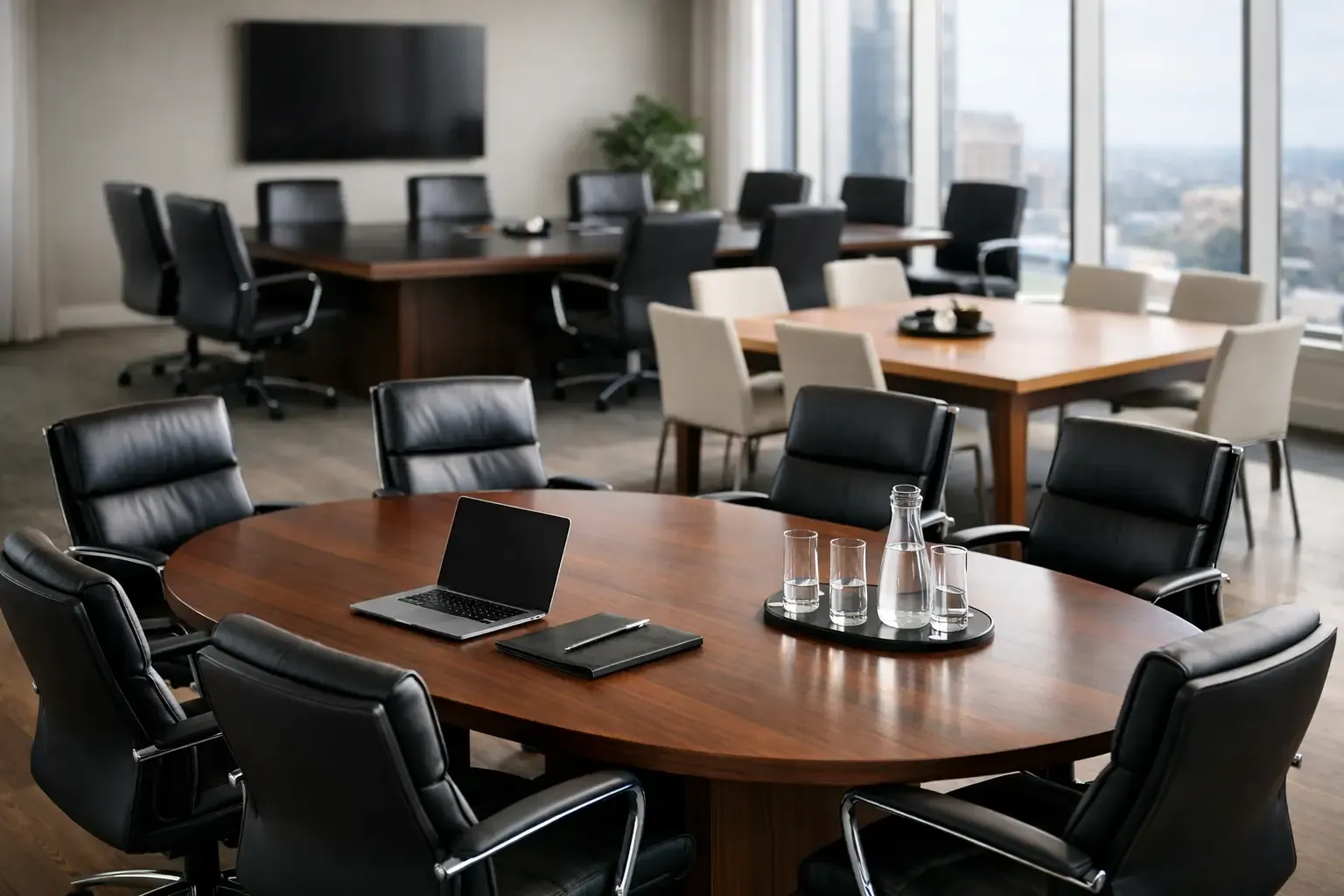
A boardroom table has to work harder than it first appears. It needs to give people enough personal space, support productive discussions, accommodate technology and present the right impression to visitors. The best tables for boardrooms are not simply the largest tables that fit in the room. They are the ones that suit how your organisation meets, makes decisions and welcomes clients.
For an SME, that may mean a compact meeting table that can host weekly team catch-ups and occasional customer presentations. For a larger business, school or public sector organisation, it may mean a substantial modular table with integrated power, data and space for hybrid meetings. Getting the specification right at the start avoids a room that feels cramped, underused or difficult to manage.
The most common mistake in boardroom planning is choosing a table from a brochure before measuring the room properly. A table can look ideal in isolation, then leave too little clearance for chairs, movement and presentation equipment once it arrives.
As a useful guide, allow around 900mm to 1,200mm from the edge of the table to the wall, cabinet or other obstruction. This gives users room to pull chairs back and move around the table without disrupting a meeting. If people regularly need to pass behind seated colleagues, more space will make a noticeable difference.
The room’s shape matters too. A long, narrow room may suit a rectangular or boat-shaped table, while a square room can work well with a round, square or compact rectangular design. Do not overlook doors, radiators, windows, wall-mounted screens and storage. These details affect where chairs can sit and where power modules need to be positioned.
For larger or awkward spaces, a measured layout is worth having before you place an order. It helps confirm seating capacity, circulation and whether a single table, modular arrangement or a different room layout will give better value.
Table shape changes the feel of a meeting as well as the number of people you can seat. There is no single right answer, but each option has practical strengths.
Rectangular boardroom tables are a familiar choice because they use floor space efficiently and suit rooms with a clear long axis. They provide a defined seating position at each end, which can be useful for formal meetings, presentations and interviews. They are also straightforward to specify in a range of widths and lengths.
The trade-off is that people at opposite ends can feel distant on very long tables. If conversations need to be more collaborative, consider a wider table with a central power and data solution, or choose a boat-shaped top to soften the lines.
Boat-shaped tables taper gently at each end, creating a more welcoming appearance while still making effective use of a rectangular room. The curved profile can improve sight lines towards a screen and bring attendees slightly closer together than a conventional rectangular top.
This style is a good fit for client-facing boardrooms where appearance matters, but the room still needs a practical, high-capacity layout. It is also worth checking chair spacing carefully, as the tapered ends can affect the usable space for the end seats.
Round tables give every attendee equal status and encourage open discussion. They work particularly well for smaller leadership meetings, interviews and collaborative sessions where there is no need for a clear ‘head’ of the table. A square table can offer a similar benefit in a compact room.
However, circular tables become less practical as numbers grow. Screen viewing, cable management and access around the room may also be more difficult. They are usually best for four to eight users rather than a full boardroom setting.
Modular meeting tables are designed to be rearranged into boardroom, classroom, U-shape or training layouts. They offer useful flexibility for organisations with multi-purpose meeting rooms, particularly where the space is used for staff training one day and formal meetings the next.
Modular options can cost more than a fixed table when extra linking components and storage are required. Even so, they often make better long-term sense than furnishing one room for only one type of meeting.
A boardroom should not be planned for its busiest day of the year. If twelve people usually attend but twenty are expected only occasionally, a comfortable twelve-seat table with additional visitor seating may be more useful than an oversized table that dominates the room every day.
Allow approximately 600mm of table edge per person as a starting point. This gives each user enough elbow room for a notebook, laptop and refreshments. For senior meetings, lengthy papers or laptop-heavy hybrid sessions, 700mm to 800mm per person is more comfortable.
Table width also deserves attention. A narrow top can save space, but it may not allow room for documents, drinks and shared equipment. For most boardroom use, a width between 1,000mm and 1,200mm is practical. Wider tables can suit larger rooms, though attendees may find it harder to hear each other or view a central speaker clearly.
Video calls have changed what many organisations need from a boardroom table. A simple top with extension leads trailing across the floor is rarely a good permanent answer. It can look untidy, create a trip risk and make meetings harder to set up.
Integrated power modules can provide mains sockets, USB charging and data connections in the middle of the table or at convenient user positions. The right arrangement depends on how people use the room. If every attendee brings a laptop, several accessible charging points are useful. If the room is mainly used for presentations, a central connection point for a screen or conferencing system may be enough.
Think about cable routes before choosing the base. Cable risers, under-desk trays and floor boxes all need to work together. A pedestal base can offer excellent cable concealment, while leg frames may provide more flexibility for chair placement. Neither is automatically better - the room layout and available floor services should guide the decision.
Boardroom tables are available in finishes ranging from practical wood-effect melamine to veneer, laminate, glass and more contemporary solid-colour options. The right choice should balance appearance, durability and budget.
Wood-effect finishes remain popular because they give a professional look without the cost and maintenance associated with natural veneer. Lighter finishes can help smaller rooms feel more open, while darker tones often create a more formal setting. For schools and public sector spaces, durable, easy-clean surfaces are often the priority.
Glass can look smart, but it shows fingerprints and may create glare under strong lighting. Veneer offers a premium finish for executive spaces, though it requires greater care and will generally carry a higher price. A well-specified laminate table is often the sensible choice for a busy meeting room used throughout the working week.
The base finish should also tie in with the room. Black, silver and white frames are versatile, while matching the table finish to nearby storage, reception furniture or desks can create a more considered result without making the room feel overdesigned.
The table and chairs need to be chosen together. Armchairs may be comfortable, but they take up more room and can limit the number of seats around a table. Armless meeting chairs offer a neater footprint and make it easier for users to move in and out, particularly in tighter rooms.
Check the chair width, arm height and overall depth against the table dimensions. A chair with arms may not tuck beneath a lower table apron, and bulky executive chairs can quickly reduce circulation space. For meetings that regularly last more than an hour, adjustable seating with good lumbar support is usually a worthwhile investment.
Consider the floor surface as well. Castors are useful on carpet tiles and hard flooring, but glides may be preferable where a more stable, formal arrangement is needed. Acoustic considerations can matter in boardrooms with hard surfaces, so upholstered chairs and suitable acoustic products may help reduce echo and improve speech clarity.
Before narrowing down options, make sure your team can answer these practical questions:
How many people use the room most weeks, and what is the maximum realistic attendance?
Will the room host video calls, presentations, training or confidential interviews?
Where are the power supplies, screens, doors, windows and storage located?
Does the room need to change layout for different activities?
Who will be responsible for delivery, installation and connecting power or data services?
These answers make it much easier to compare like-for-like quotations. They also prevent a low initial table price becoming less attractive once power units, cable management, delivery and installation are added.
A boardroom is often where visitors form an opinion of your organisation and where teams make their most significant decisions. Give the room a little planning time, and it will repay you with a table that looks right, works properly and remains useful as your needs change. If you would like help matching dimensions, finishes and meeting-room furniture to your space and budget, the Orbis Furniture team can talk through the options with you.
Projects and fit-outs
Chairs, desks, tables, storage and soft seating, with free standard delivery to UK mainland addresses on orders over £500 excluding VAT.
Office and educational furniture specialists based in Lowestoft, supplying Suffolk, Norfolk and the whole of the UK. Chairs, desks, tables, storage and soft seating from one supplier, at low prices.
Get in touch
Riverside Business Centre, Riverside Road, Lowestoft, Suffolk, NR33 0TQ
Delivery
Free standard delivery to UK mainland addresses on select orders or orders over £500 excluding VAT. Next working day, pre-build and installation options available on most ranges at checkout.
© 2026 Orbis Furniture Ltd. Registered in England and Wales, company number 12397240. VAT number GB 362 8523 86.