Free UK mainland delivery over £500 ex VAT

Acoustic Pods vs Phone Booths: Which Fits?
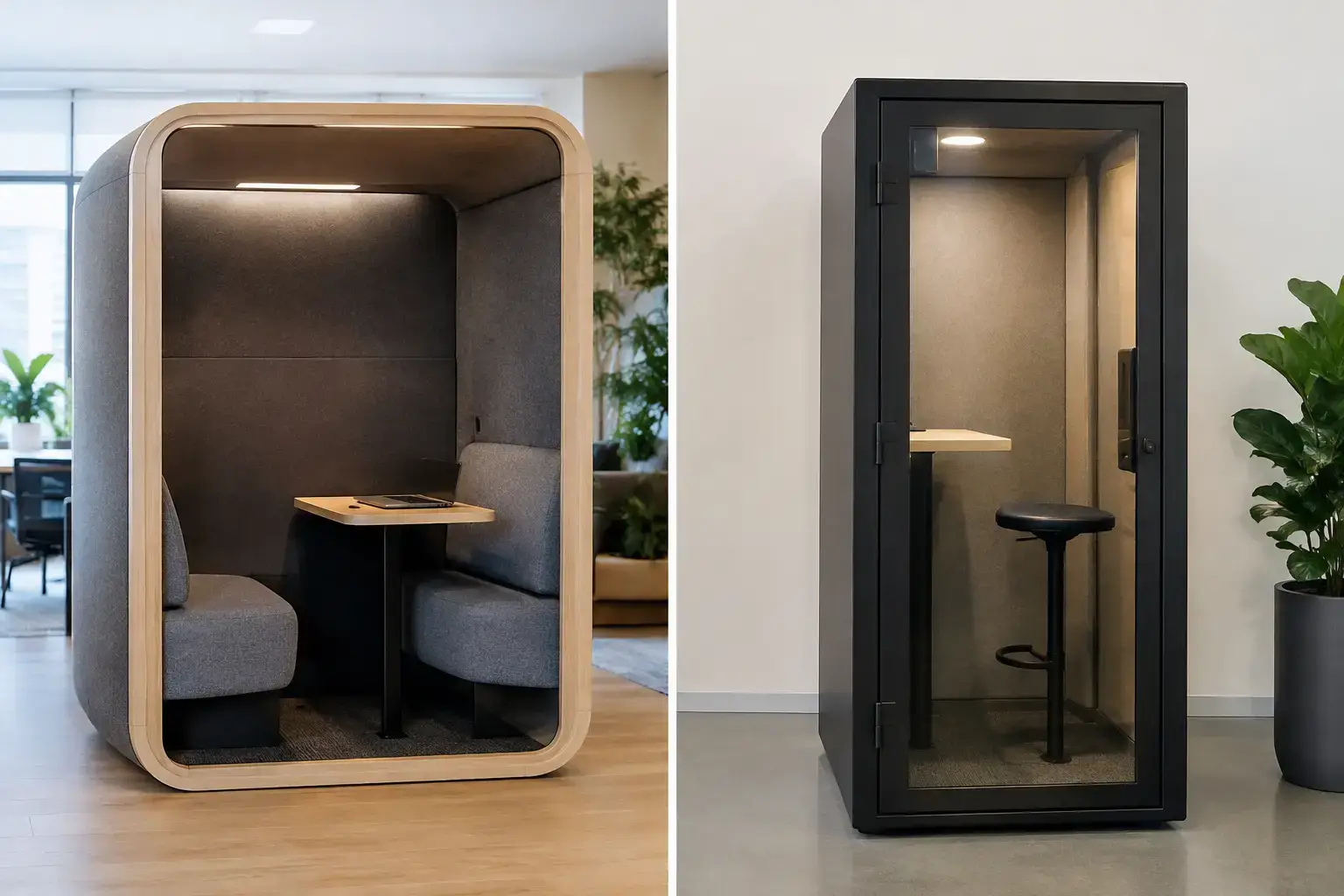
A busy office can lose a surprising amount of time to one problem: there is nowhere suitable to take a call. Staff end up booking meeting rooms for ten minutes, taking confidential conversations into corridors, or speaking over colleagues at their desks. When comparing acoustic pods vs phone booths, the right choice comes down to how people work, how much space you have, and the level of privacy they genuinely need.
Both products can make an immediate difference in open-plan workplaces, schools and public sector settings. But they are not interchangeable. A one-person booth may be the practical answer for frequent video calls, while a larger acoustic pod can create a proper meeting space without building a permanent room.
What is the difference between acoustic pods and phone booths?
An acoustic pod is a broad term for a self-contained, semi-enclosed or enclosed workspace designed to reduce distraction and improve speech privacy. Pods are available for one person, small meetings, focused work, collaboration and informal catch-ups. Depending on the model, they may include seating, a worktop or table, lighting, ventilation, power sockets and screen connectivity.
A phone booth is usually the smallest type of acoustic pod. It is designed for one person to make calls, join online meetings or complete a short period of concentrated work. Most include a standing-height shelf or compact desk, although seated options are available.
The distinction matters when planning a workplace. A phone booth solves an individual privacy issue with a small footprint. A meeting pod serves a wider purpose, but needs more floor space, a larger budget and more careful positioning. Some suppliers use the terms differently, so it is worth checking the capacity, internal layout and acoustic specification rather than relying on the product name alone.
Acoustic pods vs phone booths: start with the activity
The most useful question is not which product looks best. It is: what conversations are currently causing disruption?
If your staff regularly make sales calls, speak to clients, attend video meetings or discuss sensitive matters one-to-one, several single-person phone booths may give the best return. They keep calls out of the open office and reduce pressure on meeting rooms. They are particularly effective in hybrid workplaces where desks are shared and people need a reliable place for online meetings.
If teams struggle to find somewhere for two to six people to talk without disturbing the wider office, a larger acoustic pod is likely to be the better fit. It can become a convenient setting for project discussions, interviews, appraisals and quick meetings that do not justify a formal boardroom.
There is also a middle ground. Two-person pods work well for private conversations, focused pair work or virtual meetings where two colleagues need to join from one screen. For schools and colleges, smaller pods can support pastoral conversations, online learning or quiet study, while larger units may suit staff collaboration areas.
Sound reduction is not the same as silence
Acoustic products are often expected to make a conversation completely inaudible. In most occupied workplaces, that is not a realistic or necessary target. The purpose is normally to reduce the sound travelling in and out of the space, lower distractions and make speech less intelligible to people nearby.
A good booth or pod should make it easier for the user to hear and be heard on a call, while reducing the amount of conversation reaching neighbouring desks. Its real-world performance will depend on the construction, seals around the door, acoustic glazing, internal linings and the surrounding office noise.
Do not assess acoustic performance in isolation. A high-specification booth placed beside a noisy printer bank, kitchen or main walkway will still be less pleasant to use. Likewise, a pod placed too close to desk clusters may leave colleagues feeling that they are still within earshot. During space planning, allow sensible circulation around the unit and consider sightlines, busy routes and nearby work activities.
Capacity, comfort and dwell time matter
Phone booths are built for short, purposeful use. They are often compact and can be a very efficient use of space, especially where there is a high volume of individual calls. However, a cramped booth may not suit someone working through a lengthy online training session, a detailed client presentation or a two-hour video call.
For longer use, look closely at the internal dimensions, work surface, seating option and ergonomics. A laptop shelf at the wrong height soon becomes uncomfortable. If the booth will be used by a range of staff and visitors, adjustable seating and an appropriate desk height are worth considering.
Meeting pods need similar scrutiny. A stated four-person capacity does not always mean four people can work comfortably with laptops for an hour. Consider whether the pod will mainly host quick chats or structured meetings with screens, notebooks and refreshments. The right internal furniture layout is often as important as the external footprint.
Ventilation and lighting are essential
A well-designed pod should feel comfortable with the door closed. Quiet mechanical ventilation, effective lighting and accessible power are basic requirements, not optional extras. Poor airflow is one of the quickest ways to discourage use, particularly in a small booth occupied for regular video calls.
Check where electrical connections are required and whether USB charging, mains sockets or data provision are needed. For meeting pods, screen mounting and cable management should be considered before installation rather than added as an afterthought.
Space planning and installation considerations
Acoustic pods are often described as flexible alternatives to building new rooms, and that is true in many cases. They can be installed with far less disruption than permanent construction and may be reconfigured or moved if your workplace changes. That said, they still need proper planning.
Measure not only the product footprint, but also the delivery route, lift access, ceiling height and space needed to assemble it. Larger pods may arrive in sections and require a clear installation area. Flooring levels, nearby services and access for future maintenance also need consideration.
A phone booth is generally easier to accommodate, but it should not be treated as furniture that can simply be placed anywhere. Doors need enough clearance, users need an accessible approach, and emergency routes must remain clear. In schools, public buildings and multi-occupancy offices, it is sensible to consider accessibility requirements, safeguarding needs and site-specific fire procedures early in the decision process.
For organisations in East Anglia, a site survey can help turn a rough idea into a workable layout. For projects further afield, accurate floor plans, photographs and remote planning support can still identify likely issues before an order is placed.
Budget: compare the whole requirement
A phone booth will usually cost less than a larger meeting pod, but purchase price should not be the only comparison. Think about the number of people the unit serves, how often it will be used and what space it could release elsewhere.
For example, two phone booths may be more valuable than one four-person pod if the main problem is a constant stream of individual calls. Conversely, a meeting pod could reduce the need to convert a valuable office into a meeting room. It may also be a more sensible option where you expect the layout to change in future.
Include delivery, installation, electrical work and any required screen or furniture provision in your budget. It is also worth choosing a finish that works with the rest of the office. Acoustic products are highly visible, so upholstery colours, exterior panels and glazing style can help them feel like a considered part of the workplace rather than an add-on.
Choosing the right mix for your workplace
Many organisations do not need to choose between one format or the other. The strongest solution is often a combination: phone booths for individual calls, a small meeting pod for confidential discussions, and open breakout furniture for informal conversations that do not require privacy.
Start with a simple review of demand. Observe when meeting rooms are booked, where people take calls and which areas generate the most noise complaints. Ask staff what prevents them from concentrating or speaking privately. Their answers will show whether the priority is individual call space, small-group meeting capacity, or both.
Orbis Furniture can help organisations compare sizes, finishes, layouts and pricing across a broad range of acoustic products, alongside the desks, seating and power solutions around them. Getting the balance right at planning stage makes the finished space work harder from day one.
The best choice is the one that gives people a place to talk, think and meet without taking more space or budget than the problem requires. If you are weighing up a booth, a pod or a mix of both, get in touch to talk through the way your team uses the space.